

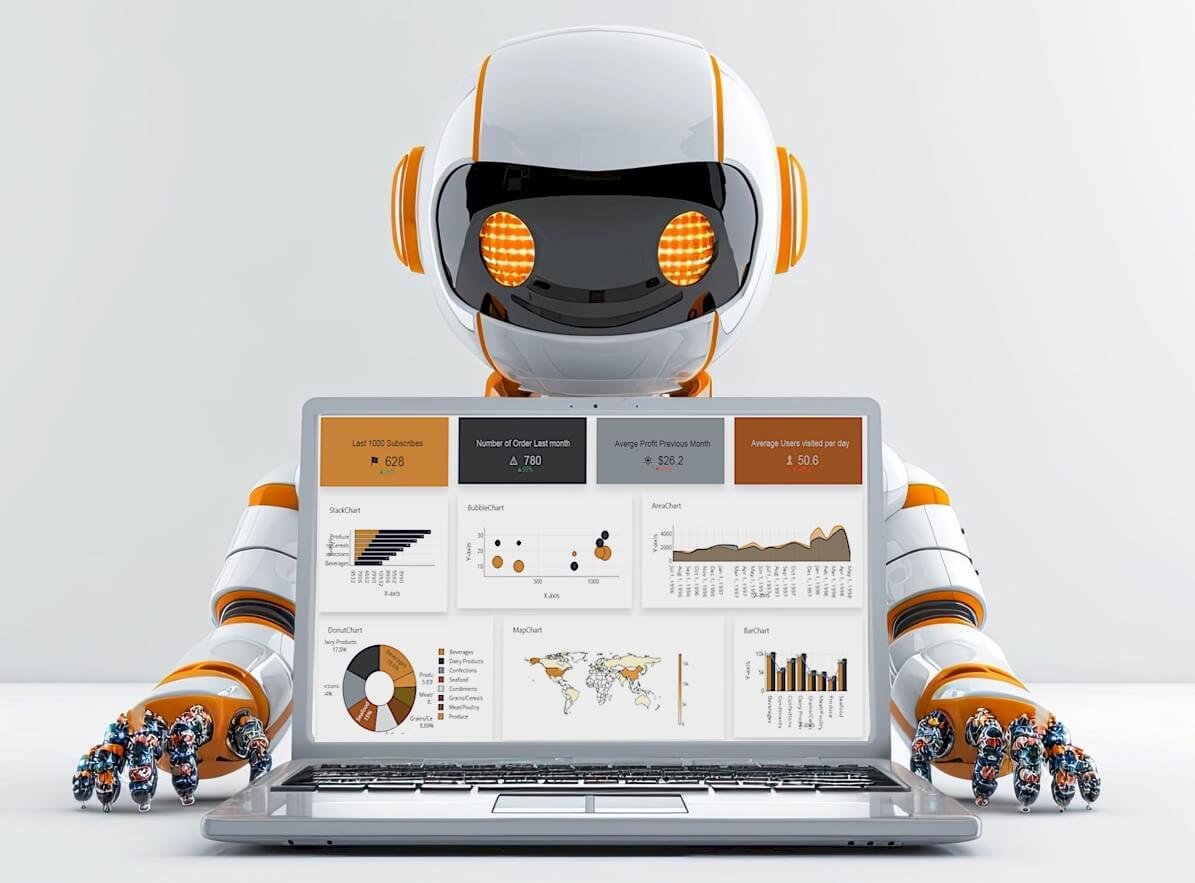
As marketing dashboards become increasingly complex, teams struggle to extract meaningful insights. Multiple platforms, blended metrics, and cross-channel reporting make it easy to misinterpret trends. Marketers now need a way to quickly understand anomalies, shifts, and patterns across sprawling datasets.
This is where GPT data explainer comes into play. By interpreting complex dashboards automatically, GPT can reduce human error and accelerate decision-making.
Why Modern Dashboards Are Hard to Interpret
Marketing teams rely on dashboards to monitor campaigns, track KPIs, and evaluate ROI. However, growing data complexity often overwhelms even experienced analysts.
Common Challenges in Dashboard Interpretation
- Multiple data sources producing conflicting metrics
- Blended charts with misaligned date fields
- Metrics updating at different intervals
- Subtle anomalies hidden in large datasets
- Overlapping KPIs across platforms
Without automated help, these issues lead to misinformed decisions and wasted effort.
How AI Simplifies Insights
Artificial intelligence, specifically GPT, can interpret dashboards in real-time, highlighting unusual trends or gaps that human analysts might overlook.
GPT Strengthens Decision-Making By
- Flagging sudden drops or spikes in key metrics
- Explaining complex blended chart relationships
- Detecting missing dimensions or inconsistent fields
- Summarizing cross-channel performance for executives
- Offering actionable suggestions to optimize campaigns
By automating interpretation, GPT frees teams to focus on strategy rather than manual data reconciliation.
The Risk of Ignoring AI Assistance
Teams that rely solely on manual analysis risk overlooking subtle but impactful trends. This can lead to:
- Misallocation of ad spend
- Misreading attribution windows
- Delayed recognition of underperforming campaigns
- Inconsistent reporting across teams
- Loss of competitive advantage
GPT mitigates these risks by providing a GPT insight engine that continuously evaluates dashboard data.
Integrating GPT Into Marketing Workflows
AI works best when integrated with existing marketing processes. Organizations often pair GPT with centralized dashboards to ensure insights are reliable and actionable.
Best Practices for Integration
- Connect all relevant marketing platforms to a single dashboard
- Use GPT to interpret anomalies and explain trends
- Automate routine analysis while keeping human oversight
- Review AI-generated insights before executive reporting
- Track recommendations and improvements over time
A structured workflow ensures that AI enhances, rather than replaces, human expertise.
Benefits for Agencies and Teams
Agencies handling multiple clients or brands face extra complexity. Each client may have distinct KPIs, reporting intervals, and dashboards. GPT helps standardize interpretation without losing granularity.
Advantages of AI Interpretation
- Consistent insights across clients and campaigns
- Faster reporting cycles with less manual intervention
- Improved cross-team alignment on performance
- Early detection of data anomalies before they impact decisions
- Better client communication with clear, understandable metrics
The efficiency gained allows teams to focus on strategy, not spreadsheet troubleshooting.
Future of Dashboard Interpretation
As datasets grow and marketing channels multiply, AI assistance becomes not just helpful but essential. Teams that adopt GPT can:
- Reduce human error in reporting
- Gain faster access to actionable insights
- Scale analytics capabilities without hiring more staff
- Maintain accuracy in increasingly complex dashboards
Organizations using GPT gain a competitive edge by ensuring decisions are informed, timely, and reliable.
Centralized Insights With Dataslayer
Many teams combine GPT interpretation with a Dataslayer insights network to centralize dashboards, unify metrics, and ensure consistent reporting. This combination strengthens confidence in data-driven decision-making.
By leveraging GPT for interpretation and Dataslayer for data organization, marketers can confidently scale their analytics without losing control or accuracy.
Final Thoughts
The growing complexity of marketing dashboards demands smarter solutions. GPT interpretation tools help teams quickly understand anomalies, trends, and performance metrics. When paired with centralized reporting platforms like Dataslayer, businesses can achieve clarity, reliability, and faster, more confident decisions across all campaigns.
